Embracing Biophilic Design Tips to Bring the Outdoors In with Window Treatments
Do you ever feel more relaxed and focused after spending time in nature? Modern homes and offices often separate us from the natural world, leading to stress and lower productivity. Biophilic design offers a powerful solution. It reconnects people with nature through intentional design choices. The good news? You don’t need to renovate your home. With the right window treatments, you can transform any room into a calm, nature-inspired space.
This article explains what biophilic design is, why it matters for your health, and six actionable tips to bring the outdoors in — using light, materials, plants, and safe window coverings.
What Is Biophilic Design and Why Do You Need It?
Biophilic design comes from the word“biophilia,”meaning love of life or living systems. First popularized by biologist E.O. Wilson, it suggests humans have an innate need to connect with nature.
In interior design, biophilic principles include:
- Direct access to natural light
- Views of greenery or landscapes
- Natural materials like wood, stone, or cotton
- Organic shapes and patterns

6 Core Tips to Achieve Biophilic Design with Window Treatments
1. Prioritize Natural Light — But Keep It Controllable
Natural light is the most important element of biophilic design. It regulates your circadian rhythm, boosts vitamin D, and makes spaces feel alive.
However, too much direct sunlight causes glare, heat, and faded furniture.
How to apply this tip:
- Use sheer shades or light-filtering roller shades to diffuse harsh light while keeping brightness.
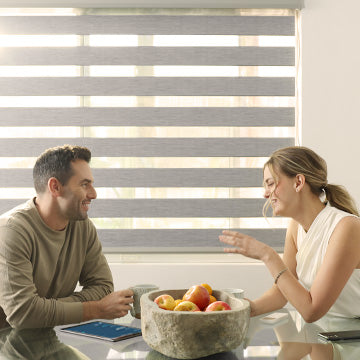
- Install zebra shades for adjustable light control — alternate sheer and solid fabric strips.
- For rooms requiring privacy (bedrooms, bathrooms), layer blackout shades with sheer curtains.
Example: In a home office, position your desk perpendicular to a window. Use light-filtering shades to reduce screen glare while maintaining an outdoor view.
Key takeaway: Maximize natural light, but give users control over intensity and privacy.
2. Incorporate Natural Materials and Organic Textures
Plastic or synthetic window treatments can feel cold and artificial. To strengthen the nature connection, choose coverings made from organic, raw, or recycled materials.
Biophilic-friendly window treatment materials:
- Bamboo shades — renewable, fast-growing, and naturally textured
- Linen or cotton drapes — breathable, soft, and biodegradable
- Woven wood shades — made from reeds, grasses, or bark
- Natural jute or hemp — adds rustic warmth
Pro tip: Match these with wooden curtain rods or untreated metal hardware for an earthy, cohesive look.
3. Add Green Elements and Botanical Patterns
Plants are the most direct way to bring the outdoors in. But not everyone has a green thumb. Window treatments with leaf, vine, or floral patterns offer a low-maintenance alternative.
Ways to integrate green design:
- Hang patterned roller shades with abstract botanical prints.
- Choose green or earth-tone curtains (sage, olive, terracotta).
- Place real or high-quality faux plants on windowsills.
- Use top-down bottom-up shades — lower the top to show plants outside while keeping privacy below.
Example: A bathroom with frosted glass windows can still feel biophilic by using a leafy patterned shade and a small moisture-loving fern.
4. Simulate Natural Ventilation and Moving Light
Nature is never static. Wind moves leaves, clouds drift, and light shifts. Your window treatments can mimic this gentle movement.
Ideas to simulate natural dynamics:
- Install lightweight, breezy curtains that move with airflow from an open window or fan.
- Use dual roller shades (sheer + solar) to create changing shadow patterns throughout the day.
- Position mirrors opposite windows to reflect moving light deeper into the room.
Even without a view, the perception of airflow and shifting light triggers biophilic responses.
5. Choose Non-Toxic, Low-VOC, and Eco-Friendly Window Treatments
This point is critical for health-focused biophilic design. Many conventional window coverings (especially vinyl blinds) release VOCs (volatile organic compounds) — chemicals that can cause headaches, allergies, and respiratory issues.
What to look for:
- Greenguard Gold certified products (low chemical emissions)
- Oeko-Tex certified fabrics (no harmful substances)
- PVC-free shades (avoid phthalates and dioxins)
- Natural untreated wood or recycled polyester
Why this matters for biophilic design:
True nature connection requires a safe, healthy indoor environment. Toxic materials break the trust between you and your space.
6. Extend Design Beyond Windows: Complementary Natural Elements
Window treatments work best when paired with other biophilic elements. Think of your windows as a focal point, and reinforce the theme around them.
Suggested pairings:
- Potted plants (snake plants, pothos, or fiddle-leaf figs) beside or hanging near the window.
- Natural wood furniture — untreated oak, walnut, or teak.
- Stone accent walls or lime-washed plaster.
- Nature-inspired artwork — landscapes, leaves, or water.
- Organic bedding or rugs — wool, cotton, or seagrass.
Example setup:
A living room with woven wood shades + a large monstera plant + a reclaimed coffee table + linen sofa. Every surface reinforces the nature connection.

Why Graywind is an Ideal Choice for Biophilic Design
If you’re looking for window treatments that combine natural aesthetics, smart functionality, and verifiable safety, Graywind offers several excellent options. Their Nature Series includes:
- Motorized Roman blinds – semi-sheer, warm, and softly lit. Provides a luxurious drapery look with smart home integration.
- Manual Panel Track Blinds – ideal for large windows and sliding doors. Organic texture and light filtering.
- Motorized Roller Blinds – gently diffuses sunlight for a calm, natural feel. Available in organic tones and textures.
All of these are made with non-toxic, low-emission materials and carry important certifications that align with biophilic and healthy home principles:
- Safe Smart Home – motors meet safety, sustainability, radiation, and EU standards.
- Healthy Green Products – harmless fabrics with low chemical emissions, balancing aesthetics and environmental responsibility.
- Always on the way to Eco-friendly – follows Reduce, Reuse, Recycle principles.
Graywind’s products are also cordless (safe for children and pets) and can be controlled via remote, app, or voice. This means you can adjust your natural light exposure effortlessly, keeping your biophilic home both beautiful and healthy.

Graywind’s products are also cordless (safe for children&pets) and can be controlled via remote, app, or voice. This means you can adjust your natural light exposure effortlessly, keeping your biophilic home both beautiful and healthy.